Pultruded FRP (fibreglass reinforced plastic) profiles have become a go-to material for industrial applications in Australia. Their strength, durability, and versatility make them a smart choice for industries like mining, oil and gas, and local government infrastructure. But what truly sets pultruded FRP apart is the ability to customise profiles to meet the specific needs of industrial projects. Let’s explore why customisation matters and how it can revolutionise your next project.
What are pultruded FRP profiles?
Pultruded FRP is a composite material created through the pultrusion process, a method that pulls reinforcing fibres, such as glass or carbon, through a resin bath before shaping and curing them into rigid profiles. This process creates materials with superior strength, lightweight properties, and resistance to corrosion and environmental wear.
For industrial applications, these features translate into materials that can withstand extreme conditions, comply with strict safety standards, and require minimal maintenance over time.
How the pultrusion process impacts profile performance
The pultrusion process is particularly well suited to producing consistent, high-strength pultruded FRP profiles for structural and load-bearing applications. Because fibres are aligned continuously in the direction of load, pultruded profiles deliver predictable mechanical properties across long spans.
For engineers and specifiers, this consistency matters. It enables accurate load calculations, repeatable performance across multiple components, and confidence that pultruded FRP profiles will behave as expected under real-world industrial stresses.
The benefits of customisation in industrial applications
Customising pultruded FRP profiles elevates their performance by addressing specific industrial needs. For instance, profiles can be engineered to withstand unique environmental challenges such as high UV exposure, extreme temperatures, or corrosive chemical environments. Tailored designs allow profiles to seamlessly integrate into project-specific installations, ensuring compatibility and operational efficiency.
Moreover, customisation opens the door to optimising material properties, such as enhancing impact resistance or increasing flexibility, depending on the application. In projects where aesthetics are a priority, customised finishes, colours, and textures can align with architectural designs while maintaining the durability and longevity of FRP materials.
What can actually be customised in pultruded FRP profiles
When specifying pultruded FRP profiles, customisation goes far beyond basic dimensions. Depending on the application, profiles can be tailored through:
- Fibre orientation and volume to suit load paths and structural demands.
- Resin systems selected for chemical resistance, fire performance, or UV stability.
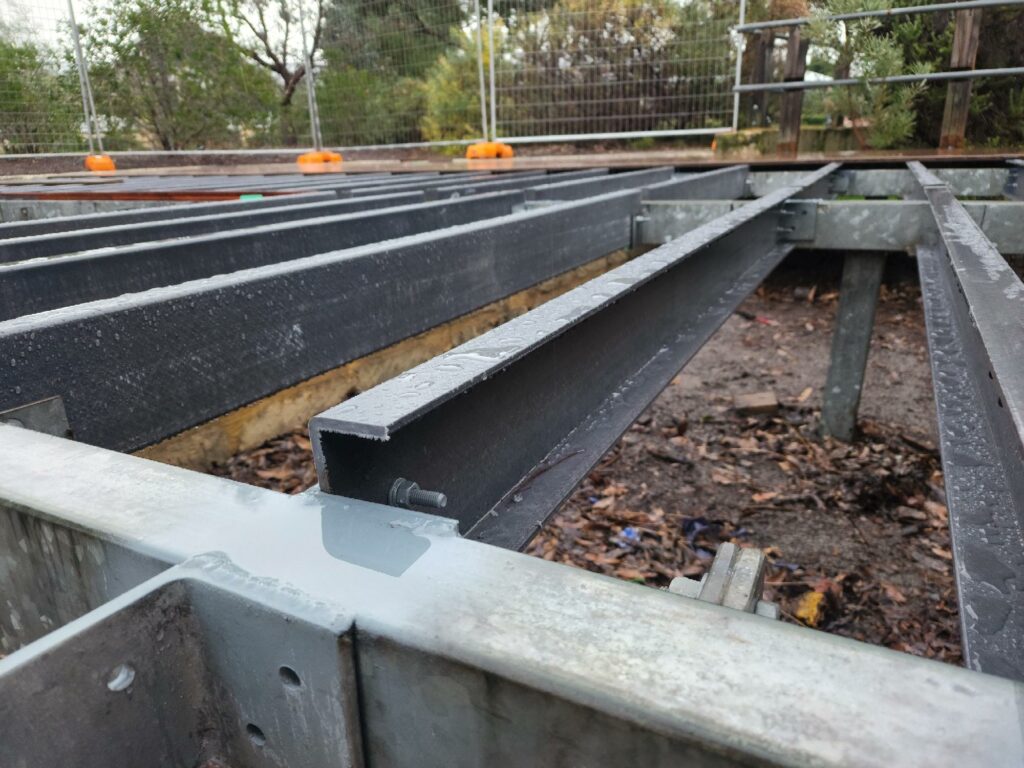
- Profile geometry designed to replace steel or timber sections without redesigning the structure.
- Surface treatments to improve slip resistance, abrasion performance, or visual finish.
This level of control allows pultruded FRP profiles to be engineered as true structural components, rather than treated as generic substitutes for traditional materials.
Examples of custom industrial applications
Customised pultruded FRP profiles excel in various industrial scenarios. For instance, in mining operations, structural walkways and platforms are designed to resist corrosion and provide slip-resistant surfaces. These lightweight yet robust profiles simplify transport and installation, especially in remote or challenging locations.
Similarly, in marine environments like ports, corrosion-resistant safety barriers are customised to withstand saltwater exposure and heavy-duty wear. Their long-lasting nature reduces maintenance needs and ensures reliability over time.
For urban projects, architectural facades crafted from customised FRP profiles combine aesthetic appeal with sustainable design. These materials can be tailored to match design goals, offering vibrant colours or natural textures while adhering to eco-friendly construction standards.
Why pultruded FRP profiles suit harsh and remote sites
In remote or high-risk environments, material failure can lead to costly shutdowns and safety risks. Pultruded FRP profiles are often specified in these conditions because they are non-conductive, corrosion-resistant, and lightweight enough to reduce installation complexity.
For sites with limited access, such as mines, ports, or elevated structures, the reduced need for heavy lifting equipment and ongoing maintenance makes pultruded FRP profiles a practical and risk-reducing choice.
How customised FRP profiles can reduce costs
One often overlooked benefit of customised pultruded FRP profiles is their potential to reduce long-term costs. Pultruded FRP’s resistance to corrosion and wear significantly minimises maintenance expenses, making it a cost-effective option for facilities in harsh environments like ports and industrial plants. You’re not constantly replacing components, fixing rust damage, or scheduling downtime for repairs. And, when profiles are customised for your exact requirements, you’re getting maximum efficiency and performance right out of the gate.
Furthermore, customised designs streamline project efficiency by reducing on-site modifications and installation time. Pre-fabricated profiles ensure faster assembly, which lowers labour costs and enhances overall productivity. Additionally, their lightweight nature reduces transportation expenses and supports sustainability initiatives, aligning with modern environmental goals. The extended lifespan of FRP profiles, compared to traditional materials, further reduces total cost of ownership, making them a smart long-term investment.
Total cost of ownership versus upfront price
While pultruded FRP profiles may have a higher upfront material cost than timber or mild steel, their total cost of ownership is often significantly lower. Reduced inspection cycles, fewer repairs, and longer replacement intervals all contribute to predictable long-term budgeting.
For asset owners managing infrastructure over decades, this predictability is often more valuable than short-term savings at the procurement stage.
The Perma Composites® difference
At Perma Composites®, we pride ourselves on delivering composite solutions tailored to your needs. Our commitment to sustainability is evident in our ability to manufacture FRP profiles with up to 87% recycled materials, contributing to reduced environmental impact. Through innovative design processes, we collaborate closely with clients to engineer solutions that exceed expectations. Every customised profile undergoes rigorous testing to ensure compliance with industry standards and project specifications.
With our expertise in pultruded FRP, we’re ready to help you create innovative and reliable solutions for your industrial challenges.
Ready to customise your FRP profiles?
If you’re looking to maximise the performance of your industrial projects, customising pultruded FRP profiles is the way forward. Explore our range of pultruded FRP products or contact our team to discuss your specific needs and discover how Perma Composites® can deliver the perfect solution for your project.